
Last Updated: November 14, 2026
Quick Summary
The best way to maintain a ceiling fan is to cut power at the wall switch and breaker, dust the blades weekly with a pillowcase or microfiber cloth, and wipe them monthly with a damp cloth and mild dish soap. Check screws and blade balance regularly, and set the direction seasonally, counterclockwise in summer and clockwise in winter.
- Switch off at the wall and breaker, and wait for the blades to stop before cleaning.
- Slip a pillowcase over each blade and pull toward the tip to trap dust weekly.
- Wipe blades monthly with a damp cloth and a few drops of mild dish soap.
- Run the fan counterclockwise in summer and clockwise in winter.
Table of Contents
- Top 10 Tips for Maintaining Ceiling Fans
- How to Clean a Ceiling Fan Without Disassembling It
- Booking Your Next Fan Refresh With Fan Sox Covers
- Frequently Asked Questions
Top 10 Tips for Maintaining Ceiling Fans
Ceiling fans collect dust fast, and a neglected fan can wobble, rattle and push that dust back into the room. Ten maintenance habits can keep a ceiling fan running quietly and looking clean, and most take only a few minutes.
-
Cut the power at the switch, not just the pull chain. Flip the wall switch off and, if the fan is on a dedicated circuit, turn the breaker off at the panel. Wait for the blades to come to a full stop, and never clean a moving fan. Watch out: if you feel any tingle or the switch feels warm, stop and have a licensed electrician inspect the circuit.
-
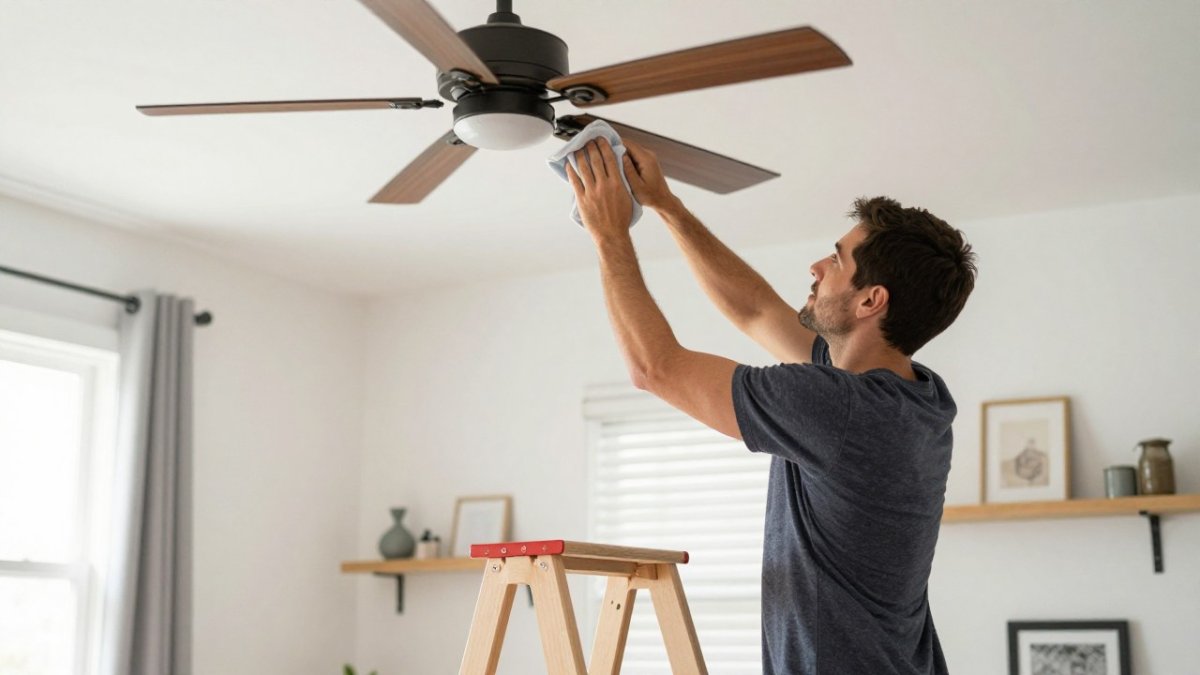
Set up safe access before you reach up. Use a stable step stool or ladder rated for the height, placed on a level floor with the legs locked. Keep your hips between the rails, do not overreach, and never stand on a chair, bucket, or countertop.
-
Dust the blades every week with a microfiber cloth or a pillowcase. Slip a pillowcase over each blade and pull it off toward the tip so the dust stays inside the fabric.
-
Wipe the blades monthly with a damp cloth and a mild cleaner. Mix a few drops of mild dish soap in warm water, wring the cloth until barely damp, and wipe from the base of the blade toward the tip. Dry completely so water does not sit on the finish or seep into the brackets.
-
Match the cleaning method to the blade material. Wood and wood-veneer blades need a barely damp cloth and immediate drying. Painted and composite blades tolerate a slightly damp microfiber cloth but not abrasive pads or solvents. Metal blades can be wiped with a damp cloth and mild cleaner, then dried. Watch out: never use bleach, ammonia, or abrasive cleansers on any blade finish.
-
Clean the motor housing and light kit gently. Wipe the housing with a dry or barely damp cloth, and do not spray cleaner into the vents. Remove glass shades and wash them separately in warm soapy water, then dry fully before reinstalling. Watch out: never let water run into the light kit or motor housing, because trapped moisture can corrode wiring and create a shock hazard.
-
Check screws, fasteners, and blade balance together. Tighten loose blade brackets by hand first, then check that each blade sits at the same angle and distance from the ceiling. A balancing kit with a clip-on weight can correct a fan that still wobbles after the fasteners are snug.
-
Diagnose noise and reduced airflow before you call anyone. A rhythmic click usually means a loose blade screw or slight misalignment; a hum can come from an unrated dimmer switch or a loose light-kit connection; reduced airflow often signals dust-clogged blades, wrong direction, or an overheating motor. Watch out: if you hear grinding, smell burning, or see flickering lights, stop and contact a licensed electrician.
-
Run the fan in the right direction for the season. Counterclockwise in summer pushes air down for a cooling breeze, while clockwise in winter gently lifts warm air that has risen to the ceiling. Flip the direction switch only when the fan is off and the blades have stopped.
-
Build a maintenance schedule by room and usage. A bedroom fan used nightly needs weekly blade dusting and a monthly damp wipe; a kitchen fan needs a damp wipe every two to three weeks; a fan in a home with pets may need weekly dusting plus a monthly blade wipe. Deep-clean at the start of each heating and cooling season.
The ten tips below cover the key maintenance habits, with the frequency or action for each.
| Tip | What to do | Frequency |
|---|---|---|
| Cut power | Switch off at wall and breaker, wait for full stop | Before every clean |
| Dust blades | Slip pillowcase over blade, pull toward tip | Every week |
| Wipe blades | Damp cloth with mild dish soap, dry fully | Monthly |
| Check fasteners | Tighten brackets by hand, check blade balance | Regularly |
| Clean light kit | Wash glass shades in warm soapy water, dry fully | As needed |
| Set direction | Counterclockwise in summer, clockwise in winter | Seasonally |
| Deep-clean | Full cleaning at start of each heating and cooling season | Twice a year |
How to Clean a Ceiling Fan Without Disassembling It
Most people can clean a ceiling fan without taking it apart. Turn the fan off at the wall switch and, if possible, at the breaker, wait for the blades to stop, and lay a drop cloth over the floor and furniture below.
Work in two passes: first run a dry microfiber cloth or long-handled duster along the top and leading edge of each blade, then wipe with a cloth wrung out in warm water and a few drops of mild dish soap, working from base to tip. Dry each blade immediately. Once blades are clean, you can also protect and store fan blade covers between seasons.
For the motor housing, use a dry or barely damp cloth and avoid spraying cleaner into the vents.
Wood and wood-veneer blades should get a barely damp cloth and immediate drying, painted and composite blades tolerate a slightly damp microfiber cloth, and metal blades can be wiped with a damp cloth and dried. Avoid bleach, ammonia, and abrasive pads on any blade finish.
If the fan still wobbles, clicks, or pushes less air after cleaning, check blade screws, blade pitch, and the direction switch before assuming the motor is failing. Persistent grinding, burning smells, or flickering lights are a signal to stop and call a licensed electrician.
Booking Your Next Fan Refresh With Fan Sox Covers
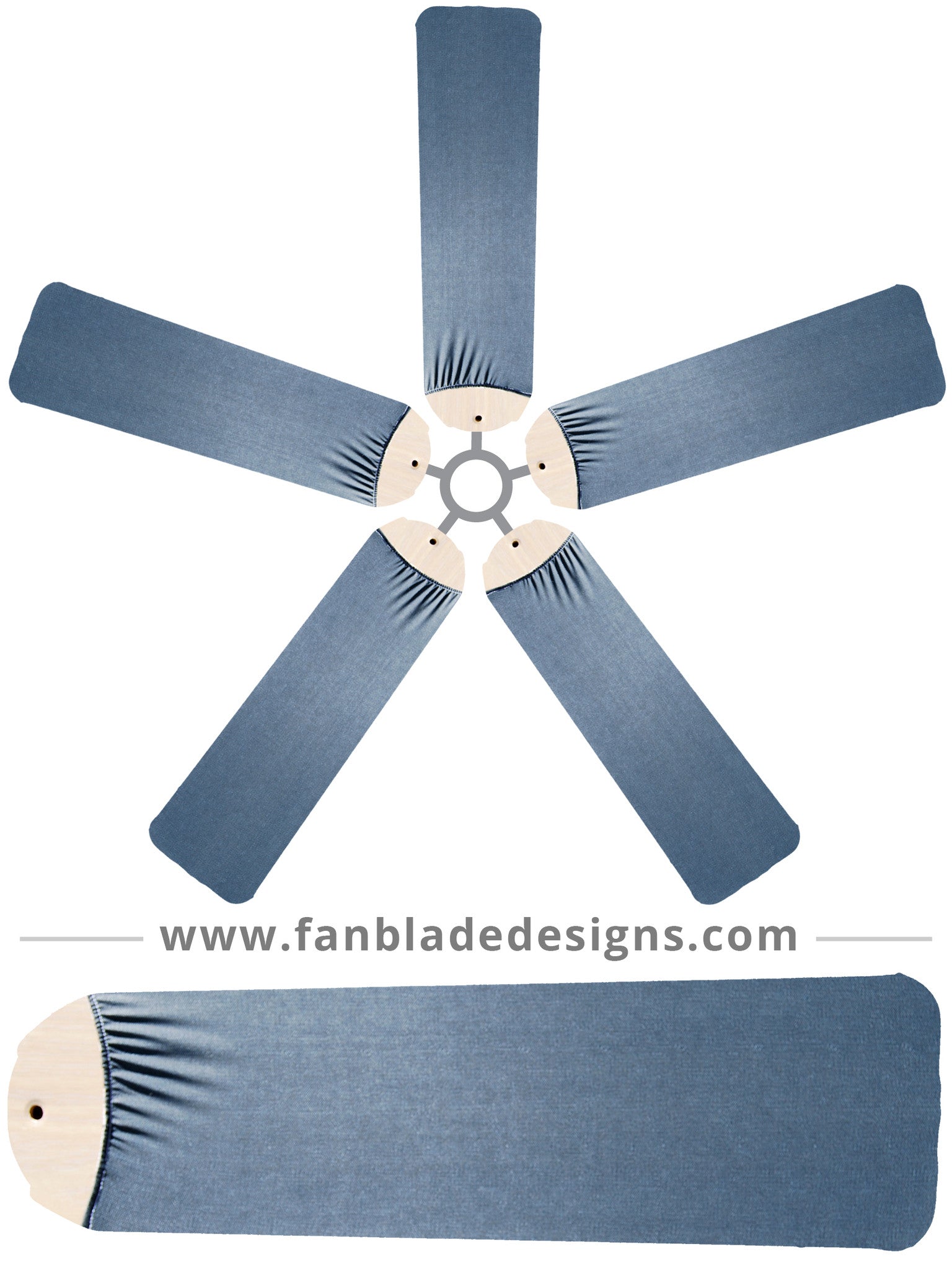
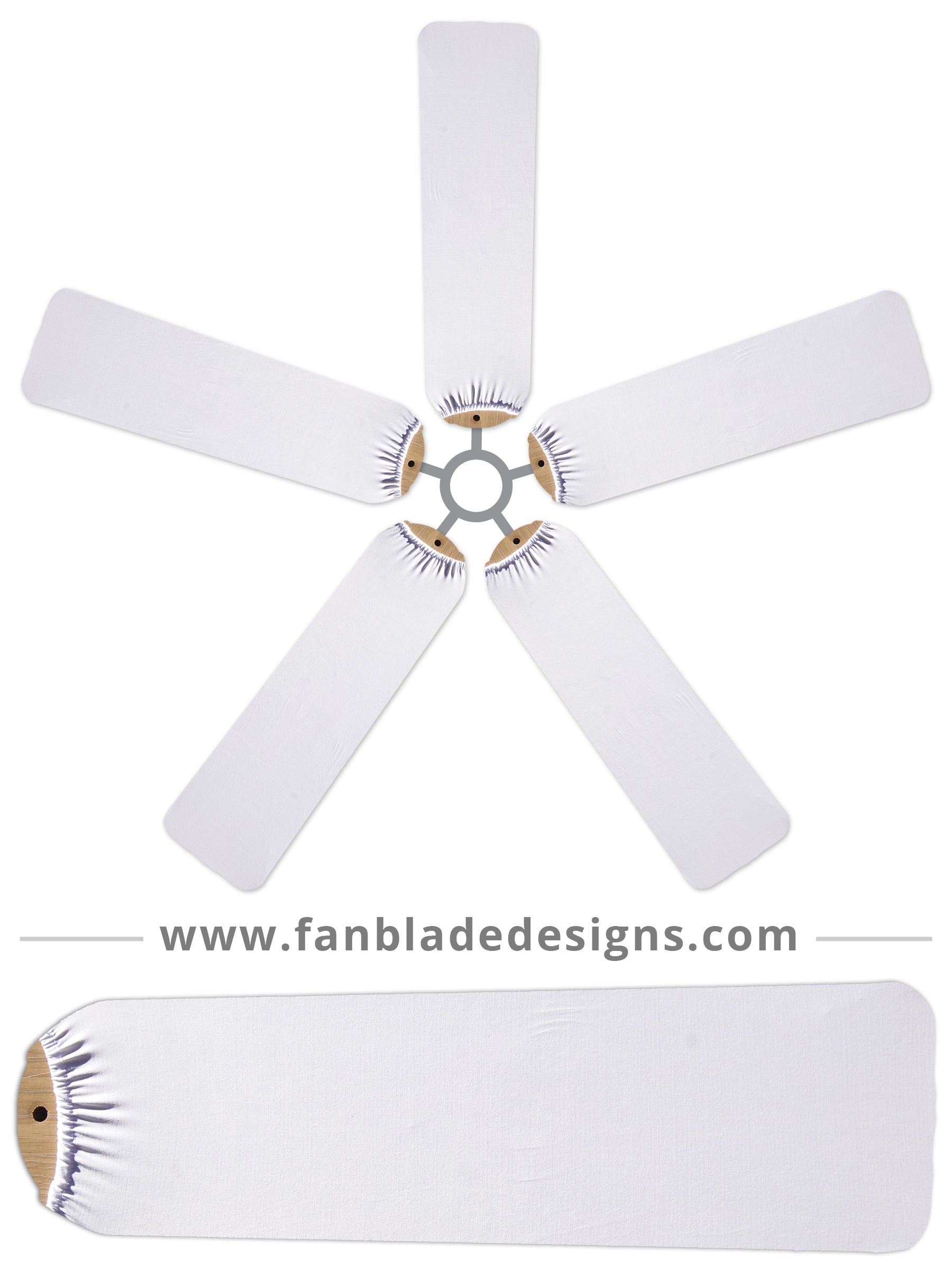
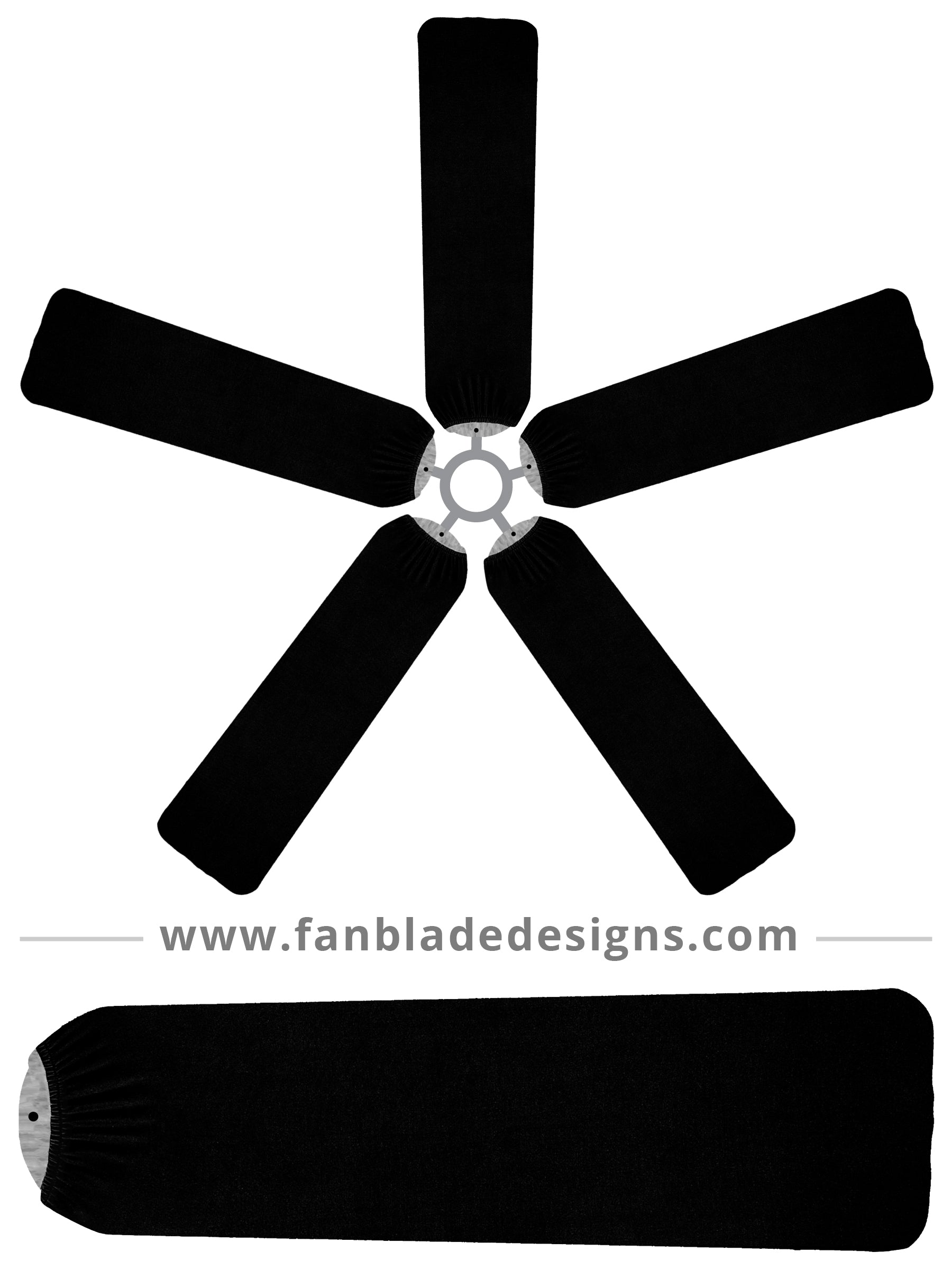
If you would rather skip the scrubbing, Fan Blade Designs makes removable, machine-washable blade covers called Fan Sox. You can browse the Slate cover to see how the finish looks on a fan. Each set of five fits ceiling fan blades 19 to 22 inches in length and 5 to 6 inches in width, and comes in several colors, including Slate, White, and Black.
Frequently Asked Questions
How do you clean a ceiling fan without a ladder?
Use a long-handled pole duster or a telescoping microfiber fan cleaner that reaches the blades from the floor. Turn the fan off and wait until the blades stop completely. Place a drop cloth beneath the fan and work one blade at a time from the tip toward the motor. Dust with a damp microfiber cloth to trap particles instead of scattering them, and rinse the cloth often. Keep a step stool available only for fixtures you truly cannot reach.
How often should you clean ceiling fan blades?
Dust ceiling fan blades weekly in rooms with pets, high traffic, or cooking odors, and monthly in quieter rooms. A deeper clean with a mild cleaner and warm soapy water is usually needed every three to six months. Regular light dusting keeps grime from building up, which makes deep cleaning faster and reduces the dust that circulates when the fan runs.
How do you clean a ceiling fan without spreading dust?
Dampen a microfiber cloth or a pillowcase slipped over each blade and wipe from the leading edge toward the tip, then pull the pillowcase off to trap the dust inside. Avoid dry dusters that push dust into the air. Turn the fan off before starting, and close doors and windows to keep dust from drifting through the house during cleaning.


