
Quick Summary
To store fan blade covers between seasons, clean each one first, dry it completely, fold it flat without tight compression, and keep it in a breathable or vented container in a cool, dry, interior spot. Check the storage bin once or twice during the off-season.
- Clean each cover before storage, since dust and oil attract more dirt over time.
- Dry covers fully, including seams and elastic channels, to prevent mildew.
- Fold flat and avoid tight rubber bands or heavy compression to prevent creases.
- Store in a breathable or vented container with a desiccant pack.
- Keep bins away from attics, garages and basements to avoid humidity and temperature swings.
Table of Contents
- 7 Steps to Store Fan Blade Covers Between Seasons
- Why Proper Storage Keeps Fan Blade Covers Usable
- How to Clean Ceiling Fan Blade Covers Before Storage
- How to Wash Fabric Ceiling Fan Blade Covers and Dry Them Fully
- How to Fold and Store Fan Blade Covers Between Seasons DIY
- How to Keep Ceiling Fan Blades Dust-Free While the Covers Are Off
- Booking a Fan Cover Refresh Before Your Next Season
- Frequently Asked Questions
7 Steps to Store Fan Blade Covers Between Seasons
Last Updated: November 12, 2026
Fan Blade Designs makes removable ceiling fan blade covers that can be switched out with the seasons. Storing them properly between uses keeps them clean, stretched and ready to go. Many renters and homeowners simply stuff the covers in a drawer, and that is how they end up dusty, wrinkled or misshapen. This guide walks through a simple process for storing fan blade covers between seasons.
Why Proper Storage Keeps Fan Blade Covers Usable
Poly-spandex fabric is stretchy, which is what keeps a cover snug on the blades, so storage matters. A cover that is crushed, damp or left in a hot attic can lose its shape and fit.
Good storage does three things:
- Keeps dust and dirt from setting into the fabric
- Prevents creases and stretching
- Protects against moisture, odors and pests
Think of storage as part of the cover's care, not an afterthought.
How to Clean Ceiling Fan Blade Covers Before Storage
Always clean a cover before you put it away. Dust and oil left in the fabric attract more dirt over time and can cause odors.
- Turn off the fan and let the blades cool.
- Slip the cover off the blade, keeping it inside out if you can.
- Shake out loose dust over a trash bag or outdoors.
- Check for spots, pet hair and grease marks.
- Treat any stains before washing.
Watch out: Do not pull hard on the elastic edges when you remove the cover. Slide it off gently to avoid stretching the fit.
How to Wash Fabric Ceiling Fan Blade Covers and Dry Them Fully
Washing is where most covers are either saved or ruined for the off-season. The right method depends on what the cover is made of, so check the fabric before you start. Most removable blade covers fall into one of four groups, and each one stores differently after washing.
Cotton and cotton-blend covers. These absorb water and hold it in the seams, so they need the longest drying time. Machine wash cold on a gentle cycle with a mild detergent, then dry flat on a clean towel or a mesh drying rack.
Poly-spandex covers. Wash cold on gentle, skip fabric softener, and air dry flat or hang in shade. High dryer heat can relax the elastic and leave the cover loose on the blade.
Elasticized covers with exposed elastic edges. The fabric may be fine while the elastic is already tired. Wash these in a mesh laundry bag so the elastic does not snag on the drum or on other items, and never wring or twist the elastic edge.
Textured, embroidered, or printed covers. Turn them inside out before washing to protect the face, and wash them separately from items with zippers or hooks. Air dry face-up in shade; direct sun can fade prints and weaken fibers over a season.
A few rules apply to every material:
- Use cold or lukewarm water on a gentle cycle.
- Use a mild detergent and skip bleach.
- Skip fabric softener, which can coat the fabric and reduce stretch.
- Put covers in a mesh laundry bag to keep them from tangling or snagging.
- Air dry flat or hang them in shade.
Drying is the step that decides whether a cover survives storage. Make sure each cover is fully dry before it goes into a bin, including the seams, the elastic channel, and any folded layers. Even slight dampness can lead to mildew, especially in a closet or a closed container.
Watch out: Do not dry covers on a hot radiator, over a heater vent, or in direct afternoon sun. The heat and UV can fade prints and relax elastic faster than a full season of use.
Covers react differently to washing and drying depending on their fabric, so use this quick guide before you store them.
| Fabric type | Washing and drying | Key caution |
|---|---|---|
| Cotton and cotton blends | Cold, gentle; dry flat or on a rack | Can shrink; skip hot dryer |
| Poly-spandex | Cold, gentle; air dry flat or in shade | High heat relaxes elastic |
| Elasticized, exposed elastic edges | Mesh bag; reshape flat | Do not hang by elastic |
| Textured, embroidered, printed | Inside out, separate; air dry face-up | Direct sun fades prints |
How to Fold and Store Fan Blade Covers Between Seasons DIY
Once the covers are clean and fully dry, folding and storage decide whether they come out next season ready to slip on or creased, musty, or stretched out of fit. Work through this sequence in order so nothing gets missed.
Step 1: Inspect each cover before folding. Hold it up to a window or bright light and check for thinning fabric, pulled threads, stretched elastic, stubborn stains, or small holes along the seam.
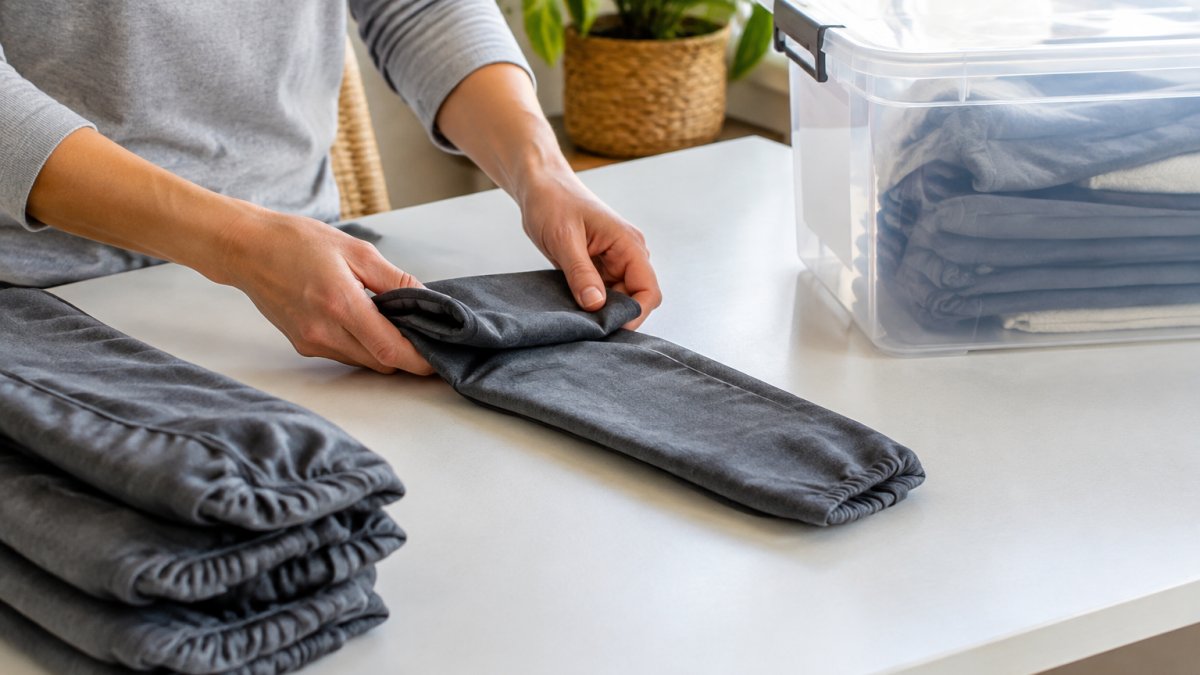
Step 2: Fold for shape, not just for space. Lay the cover flat on a clean table. Fold it in half lengthwise, then in half again, keeping the elastic edge from folding back on itself.
Step 3: Keep sets together and label them. If you have several covers, bundle matching sets with a strip of twine or a loose fabric tie, not an elastic band.
Step 4: Choose the right container. A breathable container is better than a sealed one for fabric that will sit for months. A cotton pillowcase, a canvas storage tote, or a plastic bin with vent holes lets any residual moisture escape.
Step 5: Pick a location with stable temperature and low humidity. Store the bin in a cool, dry, interior room. The same cool, dry, sheltered conditions help protect other seasonal fabric, so Gazebo Parts Direct fits naturally into a winter storage routine for a gazebo canopy.
Step 6: Protect against humidity, pests, and odors. Humidity is the biggest risk to stored fabric. Keep the bin away from damp areas and consider a small desiccant pack inside the container; replace it when it feels damp.
Step 7: Check the bin mid-season. Open it once or twice during the off-season, feel the covers for dampness, and look for pests or musty smells. If anything feels damp, air the covers flat in a dry room for a day before closing the bin again.
A quick reference checklist for the whole sequence:
- Inspect each cover for stretch, stains, and holes
- Fold flat without tight compression
- Bundle and label sets by room, fan, and size
- Use a breathable or vented container with a desiccant pack
- Store in a cool, dry, interior location off the floor
- Check the bin once or twice during the off-season
Watch out: Do not store covers in a sealed bin in a humid basement or garage, even if they went in dry.
How to Keep Ceiling Fan Blades Dust-Free While the Covers Are Off
Dust builds up on bare fan blades quickly. Wipe the blades with a dry microfiber cloth every few weeks while the covers are stored. This keeps the blades cleaner and makes the covers easier to put back on when the season changes.
For a simple routine, use this checklist:
- Wipe blades once a month
- Clean covers before storage
- Check the storage bin twice a year
- Replace desiccant packs when they feel damp
Booking a Fan Cover Refresh Before Your Next Season
Covers that have been stored for several seasons may need a refresh. Check for thinning fabric, lost stretch or stubborn stains. Pricing depends on quantity, design and delivery, so check the Fan Blade Designs website for current prices or a quote before you order. Covers that no longer fit snugly should be replaced rather than forced onto the blades.
Get started with Fan Blade Designs and give your ceiling fans a fresh look that is easy to store and easy to change. Fan Sox are machine washable, and switching seasons is designed to be quick.
Frequently Asked Questions
Should fan blade covers be washed before storing them?
Yes. Washing removes dust, pet hair and body oils that can attract pests, cause odors or stain fabric while it sits in storage. Wash covers according to the care label, usually on a gentle cycle with mild detergent, and skip fabric softener, which can leave residue. Make sure the covers are completely dry before folding them, because even slight dampness can lead to mildew over several months in a closed container.
How do you prevent mildew on stored fan blade covers?
Mildew forms when moisture gets trapped, so the key is dry covers and a dry storage spot. Air-dry each cover fully, then store it in a breathable cotton bag or a clear plastic bin with a tight lid and a few silica gel packets. Keep the bin off concrete floors and away from basements, garages and attics, where humidity swings are most common. Check the bin every few months and air out covers if you notice any musty smell.
How do I keep stored fan blade covers dust-free?
Dust settles on anything left exposed, so seal covers inside a lidded container or a zippered bag. Plastic bins with snap-on lids work well for most homes, and clear bins let you confirm the contents without opening them. Store the bin on a shelf inside a closet or under a bed rather than in an open garage. Wiping the outside of the bin before storage also prevents dust from being carried inside.
Can ceiling fan blade covers be folded for storage?
Yes, as long as they are clean and fully dry. Lay each cover flat, smooth out wrinkles, and fold it in thirds or in half lengthwise, then roll or fold again so it fits your bin. Avoid sharp creases and do not stretch the elastic edges while folding, since stretched elastic loses its snug fit. If a cover has a stiff or structured design, store it flat rather than folded to preserve its shape.


