
Last Updated: November 17, 2026
Quick Summary
Ceiling fan covers are removable fabric sleeves that wrap each blade and catch pet dander, hair, and dust that would otherwise settle on the blade and blow back into the room. They are washable, so you remove and clean them instead of wiping the blades every week. Measure your blades first to confirm the fit.
- Fan Sox fit blades running 19.5 to 22 inches long and 5 to 6 inches wide.
- Covers are machine washable and sold as a set of five for $29.00 per design.
- A cover handles dust on the blades, while a filter handles airborne particles.
- Let the fan stop fully before removing or replacing any cover.
- Stop the fan and check for wobble if one cover is wet, bunched, or crooked.
Table of Contents
- Why Pet Owners Struggle With Dusty Ceiling Fans
- Ceiling Fan Covers vs. Ceiling Fan Filters for Pet Dander
- How to Measure Ceiling Fan Blades Before You Buy
- Top Ceiling Fan Blade Covers for Pet Households
- Slip-On Ceiling Fan Blade Covers: Installation and Washing
- Ceiling Fan Cage Options and When a Cover Is Enough
- Choosing Your Pet-Friendly Fan Covers This Week
- Frequently Asked Questions
Why Pet Owners Struggle With Dusty Ceiling Fans
Ceiling fans collect dust fast, and pet owners feel it first. Dog and cat dander settles on the blades, then gets pushed back into the room every time the fan runs. Slip-on fabric covers like Fan Sox wrap each blade, so the dust lands on a removable layer you can wash instead of on the blade itself.
If you have two dogs, you already know the weekly chore of wiping down blades that seem to refill overnight. The fix is not cleaning more often. It is putting a cover between the blade and the dust, then taking that cover off and washing it when it gets dirty.
Ceiling Fan Covers vs. Ceiling Fan Filters for Pet Dander
A ceiling fan cover and a ceiling fan filter are not the same product, and treating them as interchangeable is the most common mistake pet owners make. They intercept dander at different points in the air cycle, and the right choice depends on whether your problem is what you see on the blades or what you breathe.
How a blade cover works. A slip-on fabric cover wraps the blade surface. Dander, hair, and dust that would otherwise bond to the blade land on the fabric instead. Because the cover is removable, you take the accumulated load off the fan and put it in the washing machine rather than wiping it back into the air. The mechanism is capture-by-contact: the cover does not filter the room's air, it just gives the settled debris a removable home.
How a fan filter works. A filter is a porous medium mounted on or around the blade (or across the fan's intake path on some designs) that air must pass through. Particles larger than the pore size are trapped as the fan moves air.
Which one actually traps pet dander. Dander is a protein-laden skin flake, typically in the range of a few microns up to tens of microns, and much of it is heavy enough to settle rather than stay suspended. That means the bulk of the dander in a pet household ends up on surfaces, blades included, rather than circulating indefinitely. A cover addresses that settled fraction directly. A filter addresses the smaller airborne fraction that stays aloft.
Cost and maintenance comparison. Covers are reusable and washable, so the ongoing cost is mainly detergent and time. Covers are reusable and washable, so their ongoing cost is mainly detergent and time.
Can you use both? Yes, and some pet owners do: a cover to keep the blade surface clean and a filter to address airborne dander. The caution is that stacking both increases the mass and drag on the blade, which brings you to the motor-strain question covered in the safety section below. Because covers and filters address only part of the mess, pet products that keep a home cleaner can complement fan maintenance without adding weight or drag to the blades.
The short decision rule. If the problem you can see is dust on the blades, start with a cover. If the problem you can't see, lingering odor, allergy symptoms in the room, is the concern, a filter is the tool designed for it. Do not buy a decorative cover expecting air-purification performance, and do not buy a filter expecting the blades to stay visually clean. They solve different halves of the same problem.
For a closer look at how cover materials hold up to repeated washing, see our guide to Poly Spandex Durability Ceiling Fan Covers.
How to Measure Ceiling Fan Blades Before You Buy
Before you order, measure your blades. Fan Sox are sized for blades that run 19.5 to 22 inches long and 5 to 6 inches wide. Measure from the center of the fan hub to the tip of one blade for length, and measure across the widest part of the blade for width.
Check your measurements against the fit range before you buy. If your blades fall outside it, the covers will not sit properly. For guidance on confirming the fit for curved designs, see Curved Blade Covers Ceiling Fan Fit.
Top Ceiling Fan Blade Covers for Pet Households
Our picks are all sold as a set of five, all machine washable, and all made in the USA. Pricing is $29.00 per set for each design below.

For a household with pets, we recommend starting with a design you can wash easily and see dirt on. Here is how the main options compare.
| Design | Price | Best For |
|---|---|---|
| Baby Leopard | $29.00 | Animal-print room themes |
| Zebra | $29.00 | Bold black-and-white looks |
| Daisy | $29.00 | Sunrooms and playrooms |
| White Daisy | $29.00 | Bright, light rooms |
| Paradise | $29.00 | Garden-inspired decor |
| Gems | $29.00 | Colorful, whimsical rooms |
| Orbs | $29.00 | Simple, playful patterns |
| Flaming Dragon | $29.00 | Asian-inspired decor |
Baby Leopard Fan Sox
The Baby Leopard set uses a polyester-spandex blend with a leopard print. It is a good pick if you want a wild look that still reads as practical. The cover is lightweight and machine washable.
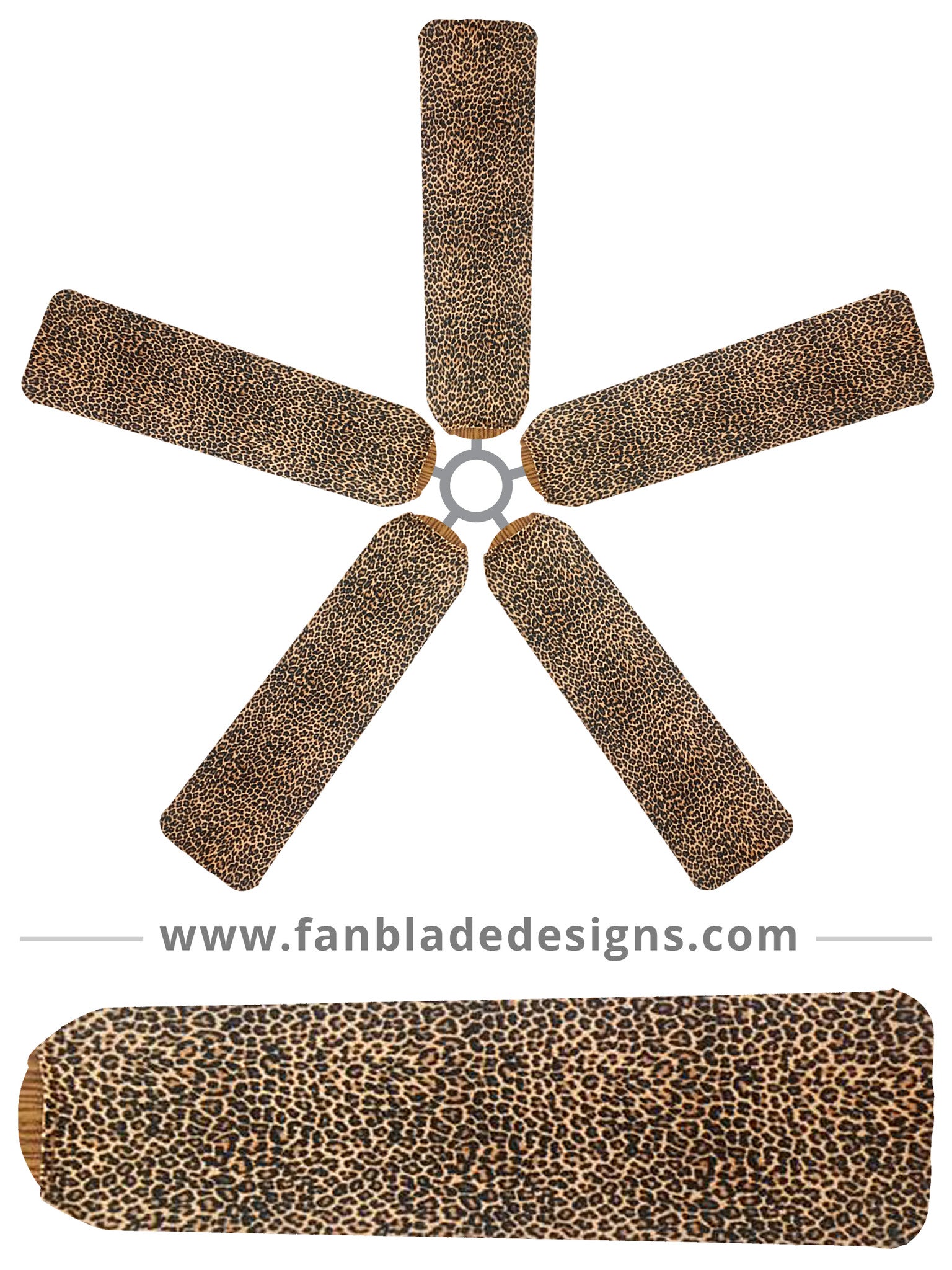
Best for: Homes that want a bold animal print without fur shedding onto the blade. Skip if: You want a plain, neutral color that blends into the ceiling.
Zebra Fan Sox
The Zebra set is black and white with a striped pattern. The black-and-white design is a bold look with a practical finish.
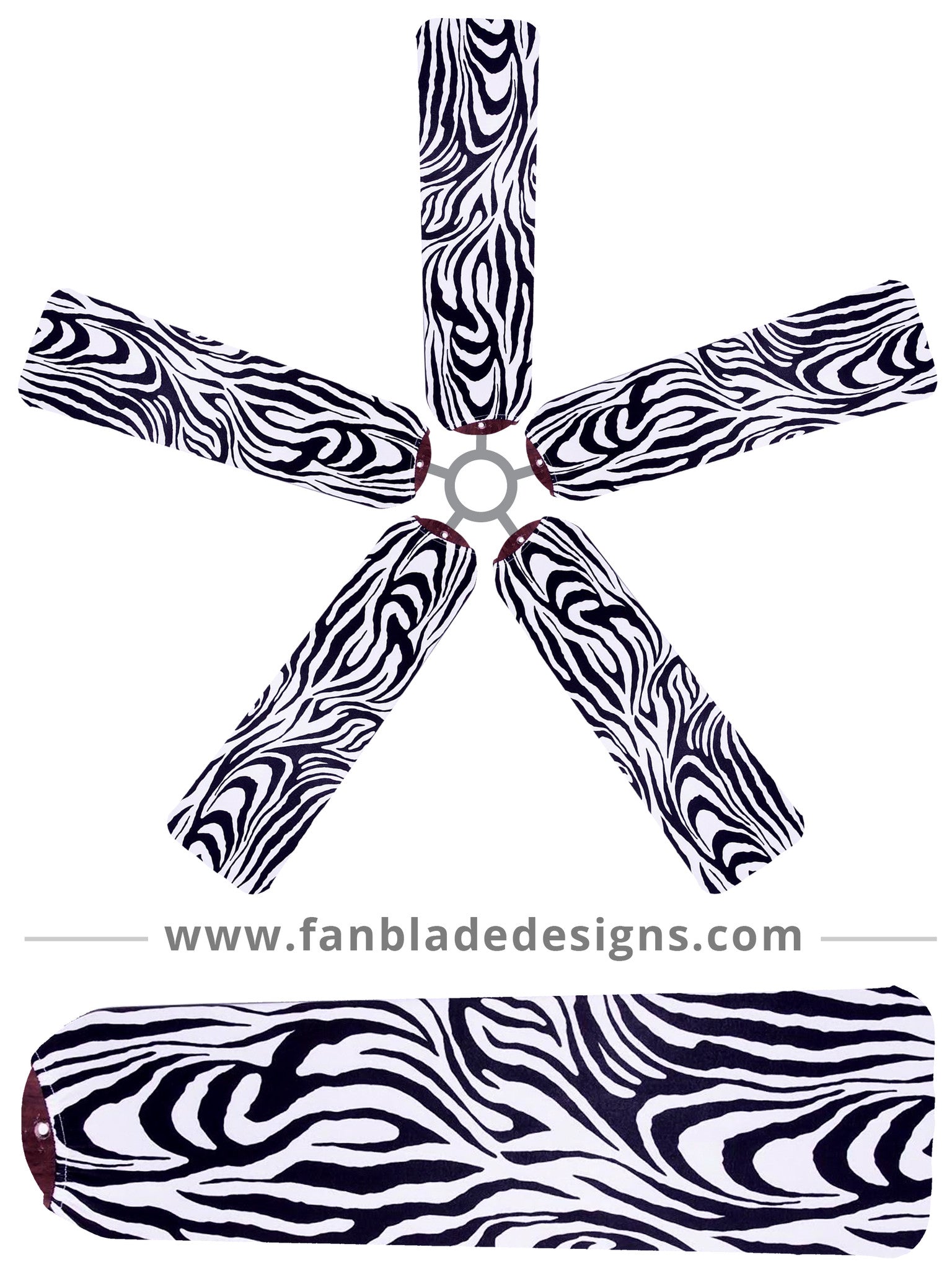
Best for: Households that want a striking look with a practical finish. Skip if: You prefer soft, muted tones.
Daisy and White Daisy Fan Sox
The Daisy and White Daisy sets share a floral design. Both are machine washable and sold as a set of five. The Daisy set comes in blue and green tones, while White Daisy uses a lighter palette.
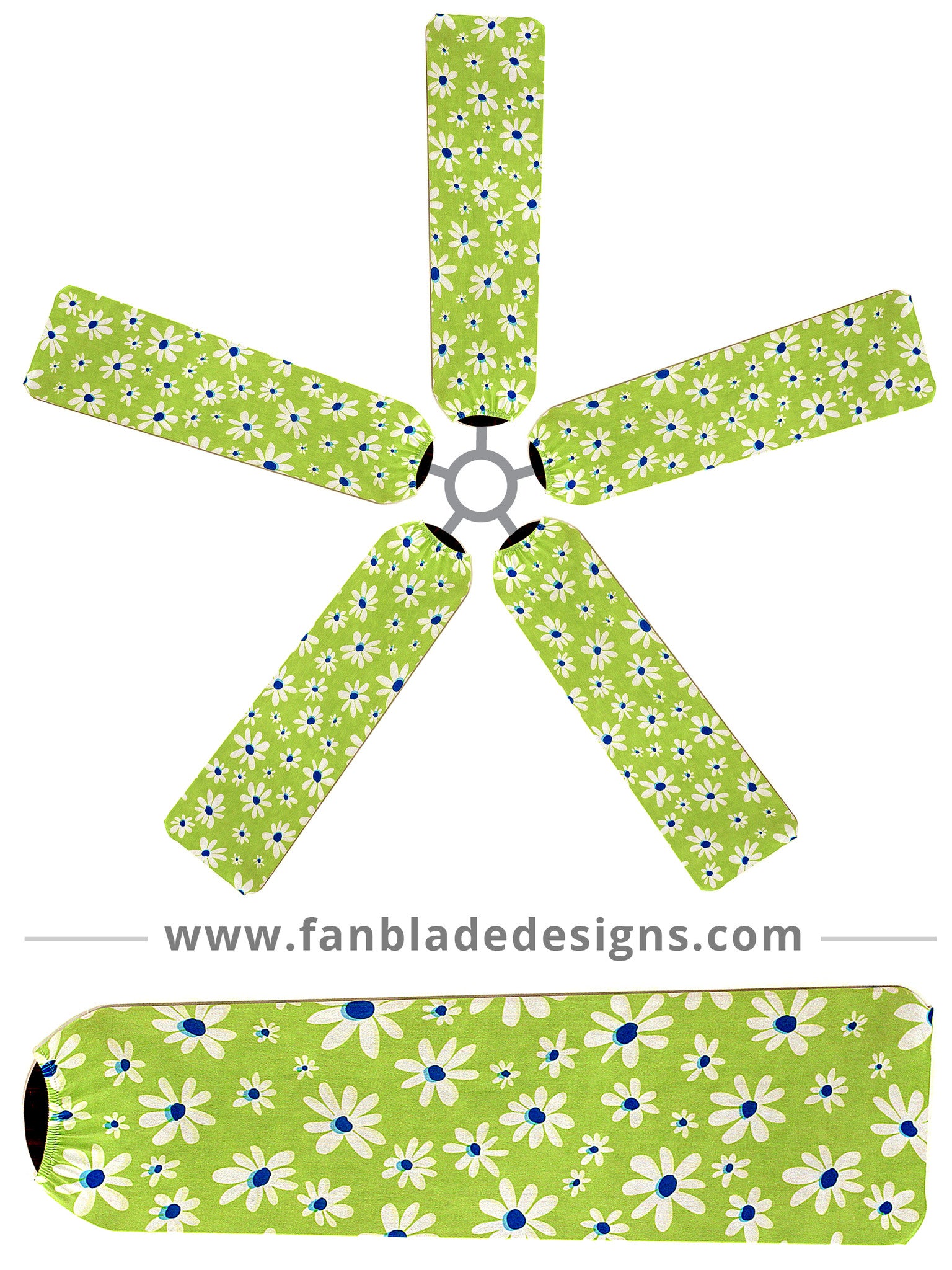
Best for: Sunrooms, sewing rooms, and playrooms. Skip if: You want a dark or heavily patterned look.
Paradise, Gems, Orbs and Flaming Dragon Fan Sox
The Paradise set has a floral bouquet design. Gems and Orbs are colorful and playful, with Orbs using a simpler circle pattern. Flaming Dragon brings multi-color flair to Asian-inspired rooms.
Best for: Matching a theme you already have in the room. Skip if: Your room already has a busy pattern on the walls.
Slip-On Ceiling Fan Blade Covers: Installation and Washing
Slip-on covers are designed to go on and come off without tools. Turn off the fan, wait for the blades to stop, and slide each cover over its blade. Work from the tip toward the hub so the fabric stays snug.
To wash, remove the covers and machine wash them. The covers are machine washable, so you can clean them as often as needed. Let them air dry before putting them back on the fan.
Watch out: a blade that is still spinning or still warm from the motor can make the cover slip or stretch. Let the fan stop fully before you remove or replace any cover.
Ceiling Fan Cage Options and When a Cover Is Enough
A ceiling fan cage is a physical guard that encloses the spinning blades, and it solves a different problem than a fabric cover. A cover manages debris; a cage manages contact. Knowing which risk you actually have determines which product you need, and in some households you need neither.
What a cage does and does not do. A cage is a rigid or semi-rigid enclosure mounted around the fan so that a pet, a child, or a raised object cannot reach the blades. It is the right call when the fan is mounted low enough that a tall dog's tail, a cat on a shelf, or a kid on a bunk bed could contact a moving blade.
When a cover is enough. If your fan is ceiling-mounted at standard height and your pets stay on the floor, contact risk is low and a blade cover handles the debris problem on its own. The cover adds a washable layer, you remove it periodically, and the blade underneath stays clean. For most pet households with a normally mounted fan, this is the proportionate solution.
When a cage is the better choice. Choose a cage when the fan is within a pet's or child's reach, when you have a large dog with a high wagging tail, when the fan is on a low porch ceiling, or when a bird or climbing pet shares the room.
Are cover materials safe if a pet chews them? This is the question most guides skip. A fabric blade cover is mounted overhead, so chewing is uncommon, but a determined cat or a climbing dog can reach a low fan. The relevant facts are the fiber content and the dyes.
Does adding a cover strain the motor? A lightweight fabric cover adds negligible mass to a blade, and the fan's motor is sized with margin for normal blade loads. The real strain comes from imbalance, not weight: if one cover is wet, bunched, or installed crooked, that blade becomes heavier or draggier than the others, and the fan wobbles. Wobble is what wears bearings and motor mounts over time.
Airflow trade-off. Any material on a blade slightly changes its aerodynamic profile. A snug fabric cover has a small effect; a loose or heavily loaded cover has a larger one, and a filter adds more drag still.
The decision rule. Low fan plus reachable pets equals cage. Normal-height fan plus visible dust equals cover. Both risks present equals both, installed and balanced carefully. Neither risk present equals neither, and a regular blade wipe is sufficient.
For general upkeep beyond covers, see Top 10 Tips for Maintaining Ceiling Fans at Home.
Choosing Your Pet-Friendly Fan Covers This Week
Start by measuring your blades against the 19.5 to 22 inch length and 5 to 6 inch width range. Then pick a design that fits the room. If you have pets, choose a washable cover you can take off and clean every few weeks.
Fan Blade Designs sells every design above as a set of five for $29.00, with the Zebra design available here. Once your covers arrive, you can wash them as often as the dust builds up, which keeps the blades clean without the weekly wipe-down.
Frequently Asked Questions
Do ceiling fan blade covers help with pet hair and dust?
Yes, they help. A slip-on cover wraps each blade in a fabric layer, so hair and dust collect on the cover instead of the blade surface. Because the covers are machine washable, you can remove the buildup in a regular wash cycle rather than wiping each blade by hand every week. Covers do not stop dander from circulating in the air.
How do you measure ceiling fan blades for covers?
Measure the length of each blade from the center bracket to the tip, and measure the width at its widest point. Fan Blade Designs Fan Sox fit blades that are 19.5 to 22 inches long and 5 to 6 inches wide. Check each blade, since some fans use mismatched sizes. Standard five-blade fans are the intended fit, so confirm the count before ordering a set of five.
Are slip-on ceiling fan blade covers safe to use?
Check the fit after each wash. Keep the covers snug so they cannot shift into the fan's path. Turn the fan off before installing or removing covers, and check that no loose fabric touches the blades during operation.
Can ceiling fan blade covers be washed?
Yes. Fan Blade Designs covers are made from a polyester-spandex blend and are machine washable. The dye is sublimated, so colors are less likely to fade through repeated washing. Remove the covers from the blades, wash them according to the care instructions, and air dry them before reinstalling. Washing once a month is a reasonable schedule in a home with pets.


