
Quick Summary
To refresh room decor without painting, change the elements that do the work paint would do: color, texture, light and layout. Start with low-effort swaps like pillows, throws and bulbs, then add removable wall art or wallpaper, an area rug and layered lighting.
- Sort ideas into low, moderate and higher effort groups, and start with the low-effort group.
- Replace bulbs with warm 2700K to 3000K tones for living rooms and bedrooms.
- Use removable hanging strips or picture hooks sized for the frame weight to protect walls.
- Follow the 60-30-10 pattern: 60 percent dominant neutral, 30 percent secondary color, 10 percent accent.
- Clear clutter first, adjust lighting second, add textiles third, and hang art last.
Table of Contents
- Why Refreshing Room Decor Without Paint Works
- Start With a Budget and Effort Plan
- Ways to Brighten a Room Without Painting
- Decorating Walls Without Paint: Art, Wallpaper and Removable Options
- Textiles, Rugs and Accent Colors That Change a Room
- Lighting Choices That Shift Mood and Brightness
- Small Room Decor Ideas Without Painting
- Room-by-Room Refresh Ideas Beyond the Living Room
- Planning Your First No-Paint Refresh This Weekend
- Frequently Asked Questions
Why Refreshing Room Decor Without Paint Works
Last Updated: November 15, 2026
Refreshing room decor without painting is one of the fastest ways to change how a space feels, and it works even when you can't touch the walls. Small, removable changes can shift a room's mood in an afternoon. The approach suits renters who can't alter their walls, homeowners who want a result without a renovation budget, and anyone who wants to change their home for a season.
The core idea behind refresh room decor is simple: color, texture, light and layout do most of the work that paint does. A new throw, a different rug, or a change in lamp brightness can make a room look newer without a single brush stroke.
Most no-paint refreshes rely on a few levers. Textiles add color and softness. Wall art and removable wallpaper change the focal points. Lighting alters how existing colors look. Accessories tie a palette together. Used in combination, these levers can make a room feel deliberately styled rather than simply tired.
Start With a Budget and Effort Plan
Before buying anything, decide how much you want to spend and how much effort you're willing to put in. A prioritized plan keeps a refresh from turning into a pile of impulse purchases.
Sort your ideas into three groups:
- Low effort, low cost: swapping throw pillows, rearranging accessories, changing bulbs to a warmer or brighter color
- Moderate effort, moderate cost: adding an area rug, hanging a gallery wall, installing removable wallpaper on one accent wall
- Higher effort, higher cost: replacing a light fixture, adding a large statement piece, rebuilding a seating arrangement
Start with the low-effort group, since it often delivers the biggest visible change per dollar. Move to the next group only if the room still feels unfinished. A common mistake is starting with the most expensive item and discovering later that a few pillows would have done the job.
Write down your starting budget and a rough time limit. Whatever you spend, keep the total on one page so you can see where the money went.
Ways to Brighten a Room Without Painting
A room can feel dim or heavy even when the walls are fine. Brightness usually comes from a mix of light sources, reflective surfaces and lighter textiles.
Begin with the lighting you already have. Replace bulbs with a color temperature that matches the room's purpose: warmer tones for living areas and bedrooms, cooler tones for kitchens and workspaces. Add a floor or table lamp to reduce reliance on a single overhead fixture, which tends to flatten a room.
Next, look at reflective and light surfaces. A mirror placed opposite a window spreads daylight across the room. Lighter curtains and sheer panels let more natural light through during the day. Glass, metal and glossy ceramic accessories also bounce light around.
Finally, reduce visual clutter. Removing a few items from a crowded shelf often brightens a room more than adding something new. Clear surfaces read as open and airy.
Decorating Walls Without Paint: Art, Wallpaper and Removable Options
Walls take up the most visual space in a room, so changing what sits on them can transform the look quickly. Renters in particular can rely on options that come off cleanly.
Wall art is the most flexible choice. A single large piece often works better than several small ones, because it creates one clear focal point. If you prefer a gallery wall, lay the arrangement out on the floor first and measure the spacing before hanging anything. Using removable hanging strips or picture hooks sized for the frame weight protects the surface when you move out.
Removable wallpaper is another route, especially for a single accent wall. Choose a pattern with enough contrast to define the space but avoid anything so busy that it competes with the furniture. Apply it to a smooth, clean surface, and test a small corner first, since some paints and textured walls don't release wallpaper cleanly.
Peel and Stick Wallpaper for Renters
Peel and stick wallpaper works best on smooth, flat walls that are clean and dry. Before applying it, check your lease for any rules about wall coverings. Start from the center of the wall and smooth each strip outward to avoid bubbles. When you're ready to remove it, peel slowly at a low angle, and warm stubborn sections with a hair dryer on a low setting. Test a hidden area first, because removal can affect older or heavily textured paint.
Textiles, Rugs and Accent Colors That Change a Room
Textiles are often the fastest way to bring color and texture into a space. A rug, a throw and a set of pillows can shift the palette without touching the walls.
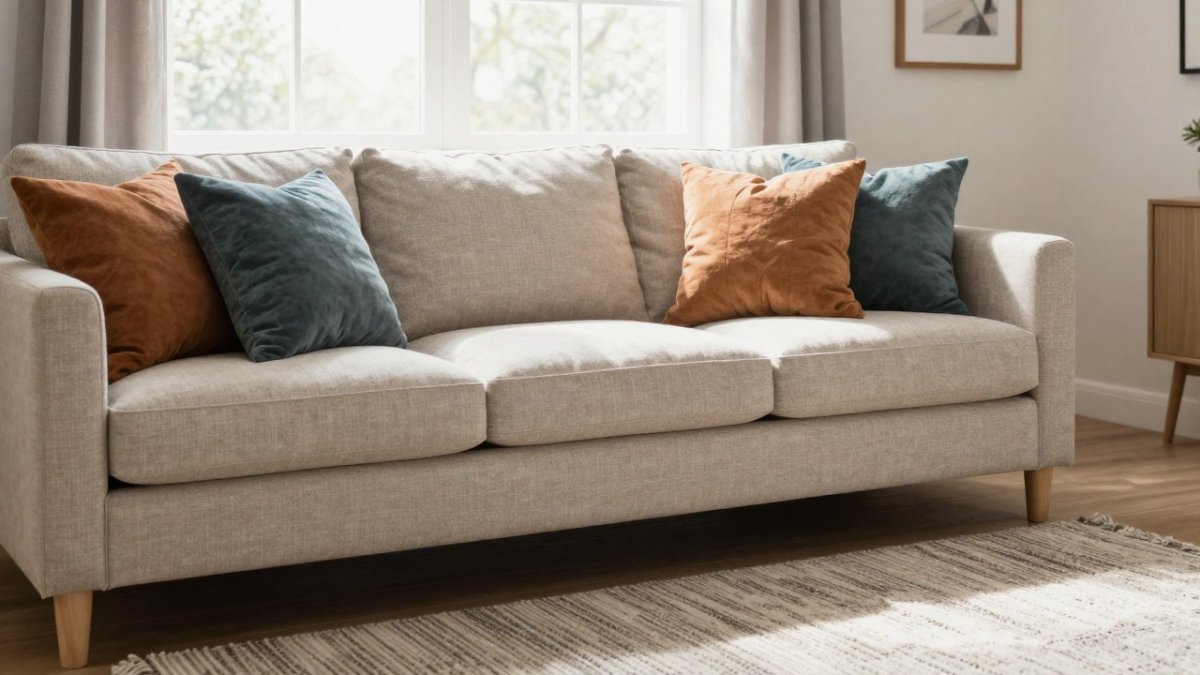
Choose an area rug large enough that the front legs of the main furniture sit on it. If you're looking for a bold solid accent, the Royal Blue product is a ready-made option. A rug that's too small makes the room look scattered. Pick a color that picks up one of the existing tones in the room, then add contrast through a pillow or throw.

For accent colors, work in a 60-30-10 pattern: roughly 60 percent of the room in a dominant neutral, 30 percent in a secondary color, and 10 percent in an accent. This keeps the room cohesive even when you introduce bold shades. Swapping pillows and blankets seasonally is an easy way to refresh the palette without buying new furniture.
Lighting Choices That Shift Mood and Brightness
Lighting changes how every surface in the room looks, so it's worth adjusting before any other step. The goal is layered light: ambient light for overall brightness, task light for reading or cooking, and accent light to highlight art, plants, or an architectural feature. A room lit only by one overhead fixture tends to look flat and casts shadows in the corners, which is why adding even one floor or table lamp usually does more for a room than swapping the ceiling fixture.
Start with bulb specifications, because they are the cheapest change with the most visible effect. Color temperature is measured in kelvin (K). Warm white bulbs in the 2700K to 3000K range suit living rooms and bedrooms and make wood tones and textiles look richer. Neutral bulbs around 3500K work in hallways and bathrooms. Cooler bulbs in the 4000K to 5000K range suit kitchens, home offices, and utility areas where clear visibility matters. Also check the bulb's lumen output rather than wattage alone: a 60-watt-equivalent LED typically produces about 800 lumens, an 800-lumen bulb is a reasonable starting point for a table lamp, and a 1,100-lumen bulb suits a floor lamp meant to light a reading chair. Check the fixture's maximum rated wattage before swapping bulbs, and confirm the bulb shape fits the shade.
Placement matters as much as the bulb. Put a floor lamp beside, not behind, a seating area so the light falls on the page or the lap rather than over the shoulder. Place table lamps at roughly eye level when seated, around 24 to 30 inches from the floor to the bottom of the shade, so the bulb is not visible from a chair. Aim accent lights at art from about 30 to 45 degrees off the wall so the beam grazes the surface instead of creating a hot spot. A mirror placed opposite a window or a lamp doubles the apparent light source and spreads it across the room.
Dimmers are the single best upgrade for mood, because they let one fixture serve both bright task light and low evening light. Check that the dimmer is rated for LED loads and that the bulbs are dimmable; a standard dimmer paired with non-dimmable LEDs will flicker or buzz. Smart bulbs are an alternative when wiring a dimmer is not practical, and they let you change color temperature by time of day without changing hardware.
Watch out: mixing color temperatures in one sightline, such as a 2700K table lamp next to a 5000K overhead fixture, makes a room look mismatched even when each bulb is fine on its own. Keep bulbs within the same room close in kelvin, and use warmer bulbs at lower levels and cooler bulbs where tasks happen.
The article's lighting guidance comes down to a few concrete specs that are easy to compare at a glance.
| Lighting choice | Value from article | Note |
|---|---|---|
| Warm bulbs | 2700K to 3000K | Living rooms and bedrooms |
| Neutral bulbs | About 3500K | Hallways and bathrooms |
| Cool bulbs | 4000K to 5000K | Kitchens and home offices |
| 60-watt-equivalent LED | About 800 lumens | Typical brightness |
| Table lamp bulb | About 800 lumens | Reasonable starting point |
| Floor lamp bulb | About 1,100 lumens | Suits a reading chair |
| Table lamp shade height | 24 to 30 inches | Floor to bottom of shade |
| Accent light angle | 30 to 45 degrees | Off the wall |
Small Room Decor Ideas Without Painting
Small rooms need careful choices, because every item takes up proportionally more space. Keep the palette light and limit the number of focal points to one or two.
Use a mirror to visually expand the room, and place it where it reflects a window or a lamp. Choose furniture with visible legs, which lets the floor show and makes the room feel larger. A single large rug often works better than several small ones.
Vertical space is valuable in small rooms. Hang curtains higher than the window frame to draw the eye upward. Use wall-mounted shelves rather than floor units where possible.
Room-by-Room Refresh Ideas Beyond the Living Room
Each room has different needs, so a refresh should match the way the room is used. The guidance below gives a starting order of operations and the measurements that keep purchases from going wrong.
In a bedroom, bedding and lighting do most of the work. A duvet cover one size up from the mattress, so it drapes over the sides, reads as more finished than a tightly fitted one. Bedside lamps with warm 2700K bulbs support a calm atmosphere, and a dimmer or smart bulb lets you lower the light before sleep. Keep the palette to two or three soft tones; a single accent pillow in a stronger color is enough contrast. If the room is small, hang curtains from a rod mounted close to the ceiling and wider than the window frame so the window reads larger.
In a dining room, the table is the focal point. Hang a pendant or chandelier so the bottom of the fixture sits about 30 to 36 inches above the tabletop, which keeps sightlines open across the table. A rug should extend at least 24 inches beyond each edge of the table so chairs stay on the rug when pulled out. A runner or tablecloth in a color drawn from the room ties the space together without new furniture.
In a home office, task lighting matters most. Place a desk lamp to the side opposite your writing hand so your hand does not cast a shadow on the page, and use a 4000K bulb for focus. A textured rug and one piece of art at eye level from the seated position soften a utilitarian room. Cable management, such as a clip-on tray under the desk, does more for the look than another accessory.
In a kitchen, textiles and light are the renter-friendly levers. A runner sized to leave about 4 to 6 inches of floor visible on each side of the walkway keeps the space from feeling crowded. Under-cabinet lighting adds task light without wiring changes when you use plug-in LED strips. Bar stool cushions and dish towels in a repeated accent color pull the palette together.
In a bathroom, a new shower curtain, a washable rug, and a mirror with a frame change the look quickly. Hang the curtain rod high and wide so the shower reads larger, and keep the palette light to make a small room feel brighter.
Hallways and entryways benefit from a runner, a mirror, and a wall piece hung at eye level, roughly 57 to 60 inches from the floor to the center of the art. These spaces are often overlooked, so a small change makes the first impression feel fresh.
A practical order of operations for any room: clear clutter first, adjust lighting second, add textiles third, and hang art last so you can judge the wall against the finished palette. Measure before buying, and keep a single list of dimensions for each room so repeat purchases fit.
Planning Your First No-Paint Refresh This Weekend
Start by picking one room and one goal, such as making it brighter or adding color. Walk through the room and note what you already own that could be moved or reused. Then list two or three purchases that address your goal.
Set a schedule: spend the first hour clearing clutter and adjusting lighting, the second hour on textiles and art, and the last hour on arrangement and cleanup. Take photos before you start so you can compare the results.
Once the first room is finished, evaluate what worked.
Browse our Ceiling Fan Blade Covers collection if you want a quick way to add a solid color to a ceiling fan. For a finished look, the solid White and Royal Blue options are a simple way to refresh a room.

Frequently Asked Questions
How to brighten up a room without painting?
Start with light-reflecting changes. Swap heavy curtains for lighter fabrics, add a mirror opposite a window, and replace warm, dim bulbs with bright white LEDs around 3000K to 4000K. Light-colored throw pillows and a pale area rug also lift the room's overall brightness without touching the walls. Clearing clutter from window sills and surfaces helps natural light travel further into the space, which often makes a bigger difference than people expect.
What can I do instead of painting my walls?
Wall art, large-scale prints, and removable peel and stick wallpaper are the most common options. Gallery walls built from frames you already own, or a single oversized piece, change the focal point without any permanent work. Fabric hung on a tension rod or a decorative wall hanging can soften a plain wall. Choose options you can remove cleanly, especially if you rent, and test a small patch first.
What are some ways to decorate walls without using paint?
Hang art at varied heights, build a gallery wall, or group mirrors to reflect light. Peel and stick wallpaper works on flat, smooth surfaces and can be removed later, though textured walls may not hold it well. Shelving with books and plants adds depth without paint. Measure your wall before buying so pieces fill roughly two-thirds of the wall width, which keeps the arrangement balanced.
How can renters update a room without making permanent changes?
Focus on items that leave no trace: area rugs, throw pillows, curtains on tension rods, plug-in or battery lighting, and removable wall decor. Use adhesive hooks rated for your artwork's weight, and check your lease before adding anything to walls. Ceiling fan blade covers, such as Fan Sox, are another option for renters because they are removable.
How do you make a room feel more colorful without painting?
Add color through accessories you can swap easily: throw pillows, blankets, rugs, vases, and framed prints. Pick two or three accent colors that already appear in your room and repeat them across different items so the palette feels intentional. Limiting yourself to a few colors usually looks more polished than mixing many. Seasonal textiles are an easy way to change the palette several times a year.


